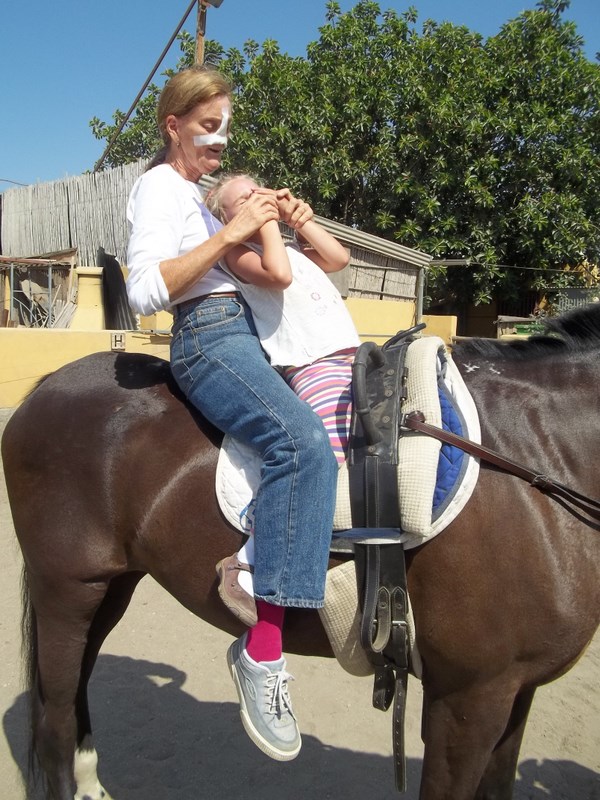
Friday, September 23, 2011
Therapeutic riding: Hispano Bretón
Friday, August 26, 2011
Finding the Mid-line
Wednesday, July 20, 2011
From My Book
I have had my last operation, which was on my eyes. The membrane around my eyes and under my eye lids were replaced with placenta but unfortunately after a month the new membrane is dissolving leaving my eyes uncovered and open to any food or drink that I have. I am now too high of a risk to operate any more. I have been off all medication since September 2010, and have been in better shape than I have been in years. I do not recommend that anyone stop their medication without their doctor’s approval, but anyway, I did. The reason I stopped is because for over three years I was taking so much medication for so many different things and none of them were stopping the problems: but they were killing me. Doctors and friends are shocked when they see me now because I am in so much better condition, both mentally and physically. I have more energy, less pain and am more productive. My insomnia has been gone for over a year and I have no visible signs of vasculitis. I have a post-cancer patient who is also participating in this study, who has different problems yet many of the same symptoms as I do. He also has suffered from depression and Short Fibre Neuropathy, for which there is no medication. For the first time in fifteen years he is pain free and has his depression under control. The side effects of the cancer treatment are disappearing and his general quality of life has improved to the point that he wants to get his own horse so that he can ride more often. This is far from the end of the investigation or my practice of the ANIMO-ALBERO therapeutic riding program. That is just really beginning. Every day we are finding so many ways in which the horse can help people suffering from circulatory problems or the side effects of medical treatments, to reduce pain, to prolong a better quality of life and to help people deal with their fear when suffering with a terminal disease. We have now found that with a few months of continuous therapy the effects are long term and not short term as we had originally thought. I know that this program does not eradicate the disease and I don’t want to give anyone false hopes, but by just practicing this therapy twice a week, I have improved my quality of life and am living almost pain free; allowing me to be a wife, mother, grandmother and friend once again. This is something that was stripped away from me by Rhodatarula, Wegener’s disease plus a series of misdiagnoses; also by the ten years that were taken away from me by the more than thirty operations that left me so physically disfigured that I suffered severe depression and wouldn’t socialize for over three years. One trip to visit our daughter, Jessica, and grandchildren in Oklahoma; a trip that I thought would be my last, changed my life around 180 degrees. A little pinto gelding, by the name of Pronto owned by Patsi Smith, was the beginning of my new life and the investigation into the ANIMO-ALBERO program. I hadn’t ridden in over eight years and was coaxed into going riding with my children. I found that not only did I feel more energetic and happier but I somehow found a hidden strength inside of myself. This strength and self confidence made me start to go out with the family - not worrying about what people thought - and I found to my surprise that everyone was so nice to me and that my scars and bandages didn’t seem to make a bit of difference to them.
It is my dream, that one day the medical profession will take note of the work that we are doing and that thousands of people may benefit from what we have discovered and that the investigation continues for years to come.
Note: It is vital that family, friends and caregivers encourage their patients to go to therapy, no matter what kind it is. Usually the patient is too tired or doesn’t feel up to it but I can tell you from experience, that once you go you feel much better. I learned this way back when a volunteer, Sarah, that took me to my riding therapy, told me that even though I didn’t feel like riding, we would go and if I didn’t want to ride we could come back home again. It is a lesson I have never forgotten and am forever grateful to her.
Tuesday, June 21, 2011
How a Horse Helps Against Depression
I have decided to post this picture alone instead of including photos of the other animals that have helped me deal with my illness. I will post them on another day because they are important too. This photograph shows the emotion and joy that I get when I am around the animals and I think it has more impact, standing on its own. This is a Friesian mare called ‘Frisona’, who happens to be carrying the foal of the horse of my dreams, ‘Ero’, who is on another posting below. I have fallen in love with ‘Frisona’. The first time I rode her, it brought me to tears: it was such an emotional experience for me. She has such a wonderful disposition and it feels like you are floating when you ride her. She has a different gait from other horses, which gives more benefit in ten minutes than most horses manage in half an hour. She is very affectionate and follows you everywhere.
But, let’s go to the photograph. Animals have no prejudice and love you as you are; they take away any feeling of depression and they seem to understand when you are feeling down or have a problem and react accordingly. That’s why I can share this picture with you.
Thursday, May 12, 2011
Animo Update (Updated)
::: ::: :::
Barbara Napier, the director of Animo, is on the board of the Federation for Riding for the Disabled International (FRDI) - elected at the international conference in Colorado in 1987. She has since attended the AGM in Paris this March and a further international meeting in Munich during September as part of an international AAT conference.
Hippotherapist Joan Would visited Animo on May 16 and 17, and imparted a two-day seminar to 25 physiotherapists, doctors and rehabilitation specialists. Joining her was the director of the Spanish Spina Bifida Association, Dr Carlos Miguelez. Information from Barbara, 950 478 268.The annual ANIMO dinner will be in Mojácar at El Puntazo on Wednesday, December 4th. During the evening, there will be a satellite link up with the Royal Prince, Felipe, Duke of Asturias. Talk to us about dolphin therapy? An associate from Madrid wishes to start a centre locally which sounds interesting.
ANIMO's animals are two dogs (under training), six horses, four donkeys, wild boar, tortoises, a rather affable pig, sundry rabbits, guinea pigs, peacocks, ducks, turkeys, about a hundred love birds and some chickens. Did I mention the sheep?Cash is always short, as we don't charge our disabled friends, and we work with volunteers (thanks as always to Viv, Keith, Doctor Maria Rose, Lionel, Tina and Juanico). But we have one full time employee, light, maintenance and a lot of animal-feed to cover.We now have over thirty students using the centre, from Almería and Murcia provinces. Most have noted improvement in their mobility.Our sessions (weather permitting) at the Era del Lugar centre in Mojácar (Almería, Spain) are Mondays and Wednesdays, at 5.00 to 7.00pm and Sundays 10.30am to 1.00pm.
We're always looking to make new friends, give us a call 950 478 268 or 34 950 478 268 from outside Spain, or national call 950 478 268 950 478 268 , and fax 950 478 789, or e-mail us at The Entertainer.
Miguel Rios Supports ANIMO
The Spanish rock star Miguel Rios joined the ANIMO gala evening at the Pascha discoteque in Mojacar, Almeria, last Saturday. Miguel, accompanied by Pepe Grano de Oro, the lead guitarist from the legendary Los Puntos pop group (rated during the late 'sixties as Spain's best selling band), performed two of his best known songs with a chorus of thirty children who accompanied him in sign-language. The gala, which featured Juan Roque, Corleone, Los Templarios and Backbeat, was organised by Barbara Napier, the president of ANIMO, an association which helps the disabled using animal assisted therapy. The keynote songs were 'El Himno de la Alegria' and 'Santa Lucia'. Miguel Rios, who had recently completed a Kurt Weill concert in Granada together with Ana Belén, said afterwards that he was delighted to freely give some of his time for such a noble cause. Around 1000 people attended the concert.
INTRODUCTION
ANIMO, a non-profit association currently in its formative stages, consists of two distinct but complementary entities--a Research and Rehabilitation Center for Handicapped Persons, and a Farm and Wildlife Animal Conservation Center. Initiated as two separate entities, the overlap of interests and of key personnel provided a significant synergism by incorporating the two into ANIMO. The common element uniting all activities within ANIMO is the importance and utility of the relationship between man and animal. Animal Assisted Therapy and Animal Assisted Activities are almost unknown in Spain but are widely and successfully practiced in other countries. A remarkable benefit has been observed when animals and humans come into contact with each other. Animals have a way of relieving the symptoms of depression and creating a calming effect, partly due to the animal's complete lack of prejudice and total acceptance of a person as he is, boosting self confidence and improving mental health. The improvement in patients with depression has been widely observed when interacting with animals, which is especially useful in accident victims who have to learn to deal with a new handicap. A tremendous improvement has also been noted in stroke victims when they come into contact with animals--just the touch of their fur seems to inspire muscular movement in paralized areas. The benefit of Animal Assisted Activities (AAA) and Animal Assisted Therapy (AAT) is that the independence, integration, confidence, mental and physical health in the individual are improved. Animals can take the place of a missing sense, exercise and massage body parts that can no longer move on their own, or help with the tasks of everyday life, providing a happier, healthier life for the handicapped individual. The values of riding for the disabled and assistance dogs are described in detail in the following sections on horses and dogs. ANIMO is aimed at, but not exclusive to, the physically and sensorally handicapped in Spain, which, according to a study carried out by INSERSO in 1986 and published in the Instituto Nacional de Estadísticas( INE ), was 5,191,063 people. Added to this number are the handicapped people from other European countries who have expressed a desire for a holiday, therapy and sport center in the south of Spain, where they may take advantage of the warmer climate.
RESEARCH AND REHABILITATION CENTER FOR THE HANDICAPPED. ANIMO is involved with all aspects of the ways in which handicapped persons may benefit from their relationship with animals--specifically horses and dogs at this time.
HORSES. Although the concept of handicapped persons riding horses may be unfamiliar and startling to many, therapeutic riding has been widely and successfully employed in other countries, particularly the UK and USA. It includes four major elements of providing treatment for people with disabilities: Hippotherapy, in which the rider is influenced by the horse, rather than controlling it. The movement of the horse imparts a movement of the rider's pelvis that closely resembles that of walking. Under the supervision of a physiotherapist this movement can be used to stimulate the nervous and muscular systems of the rider. Physician- or therapist- prescribed exercises, which strengthen, stretch, and relax the muscles, can also be done on the horse's back.
Rehabilitative Riding is a type of treatment which uses functional horsemanship skills (movements while riding to maintain control of the horse) to achieve a therapeutic or educational goal, such as improved motor skills and speech/language skills.Sport riding is used to develop social skills and to provide recreational therapy and includes such activities as trail riding. Many handicapped people display an extraordinary ability in classical dressage and other equestrian events. At ANIMO we will provide top level training for these athletes to enable them to compete on local, national or international levels. Developmental Vaulting, which is used to improve cognitive, perceptual, and motor skills, allows a rider to explore various types of movement on the horse's back.The center will also provide Carriage Driving, both as a recreational activity and at competition level.Riding, whether for sport, therapy, or pleasure, is psychologically and physically advantageous for the handicapped. It gives them the opportunity to go places unavailable in his everyday life, and to experience the world from a new vantage point, the whole time providing the much needed stimulation to muscles and vital organs. Most of the trail-riding at ANIMO will be carried out on donkeys with specially fitted tack, as donkeys tend to be more surefooted and calmer for novice riders. This will also help revive a dying breed and bring a new usefulness to the Andalucian donkey, which is now an endangered species.The instructor must have a real understanding and knowledge of horses and an ability to communicate with disabled people. They should have an understanding of the rider's disabilities and should work as part of a team including the physiotherapist/occupational therapist, center staff members, and other helpers. The team will set realistic goals to develop the full potential of each rider, while giving him a sense of achievement and enjoyment.
All ANIMO horses will be sponsored by companies, with the option to sponsor school horses or competition level horses, providing positive image and publicity for many years with a one-off cost and no on-going expenses or responsibilities. Near the stables and the kennels and with easy access to both, will be a complete veterinary surgery to cope with the needs of all the animals on site and to provide training facilities for students. All animals will undergo a veterinary inspection on acceptance and on-going supervision for vaccinations and worming. Aside from good health, the character of all dogs and horses will be studied by a team of ANIMO personnel to insure a good temperament and easy handling.
PETTING ZOO: This activity is an outgrowth of an informal animal center which has been maintained for many years by the president of ANIMO at her home/farm. Due, perhaps, to the informal and casual setting of the center, all manner of birds and animals which do not normally breed in captivity have reproduced well. This has also been a popular educational and recreational center visited frequently by groups of local school children. All of the local communities have expressed interest in seeing this activity continued and expanded to enable the school children to experience, at first hand, typical farm and domestic animals which are no longer commonplace in their homes.
RECUPERATION CENTER FOR NATIVE WILDLIFE: This center will be concerned with restoring the viability of native wild birds and animals which typically are brought to the center by concerned persons who encounter them in a distressed condition, such as very young birds which have fallen out of the nest , injured birds or animals which cannot survive on their own, and wild-type animals which have been raised in captivity and cannot compete in their proper environment. Every effort will be made to restore these creatures to a functional level such that they can be returned to their natural habitat. Those animals which are not capable of resuming normal existence will be kept at the center, where they are particularly appropriate, as often a handicapped person will relate especially well to a handicapped animal.
VISITING ANIMAL PROGRAM: Since we will have a wealth of animals of all types and many volunteers, a practical step for us is the very successful Animal Visitation Program wherein animals are taken to other centers, children’s hospitals, homes for the elderly, etc., where the patients often find the sight and touch of the animals both enjoyable and therapeutic.
ANIMO: CURRENT STATUS (1998) The Town Hall of Vera has recently ceded three hectares (around eight acres) to the association, and is actively helping in the projected move to the new permanent site. Barbara Napier, the President of ANIMO, has traveled widely in Europe speaking at conferences and on the radio and TV. Her boundless energy and determination has done much to bring the above-mentioned concepts to the attention of the Spanish handicapped societies and organizations.
CONTACTS and ADDRESSES ANIMO, Apto 34, Mojacar, 04638 Almeria, Spain Telephones: (950) 478 268 (both voice and TTY/DTS). Asociacion Benefica: No 137,284. CIF: F04219614
ANIMO-May 2011 This center does not exist now but ANIMO continues to help other centers starting up, gives conferences and courses and is currently working on a new therapy for terminally ill people called ANIMO-ALBERO. This program has shown great promise for reducing pain, side effects of medication, improving circulation, posture, clearing lungs, helps dysfunctional organs function, removes marks from vasculitis , cures insomnia and a host of other benefits. Every day in this new investigation we are discovering new ways that the horse can help improve the quality of life for people with sever illness. You can see videos and read about our investigation and the continuing work of ANIMO at; animoaat.blogspot.com or the long running old blog at animospain.blogspot.com or contact me: Barbara Napier at brbrnapier@yahoo.com or animoaat@yahoo.com the main phone number is still the same (34) 950 478 268, the postal address is Era de Lugar 15, Mojácar, Almería, 04638, Spain
ANIMO, PASO A PASO...
ANIMO es una asociación nacional no lucrativa cuyo objetivo principal es la investigación y rehabilitación de personas discapacitadas mediante terapia asistida por animales (AAT), actividades asistidas por animales (AAA) y desarrollo de nuevas terapias derivadas de la experiencia adquirida. Todo ello sin menoscabo del seguimiento terapéutico aplicado usualmente por los distintos especialistas de nuestro sistema sanitario.En España, la terapia y actividades asistidas por animales es una práctica poco extendida y por lo tanto bastante desconocida. Sin embargo, la solidez del proyecto está basada en la actual experiencia y conocimiento de la terapia que avalan cerca de 100 años de trabajos de investigación y desarrollo en centros que la practican por todo el mundo bajo la supervisión de los respectivos servicios técnico-sanitarios.La terapia con discapacitados asistida por animales se entiende como un programa de apoyo a otros tratamientos médicos que, trabajando como un equipo multidisciplinar, proporcionan índices mucho más elevados en los resultados perseguidos. Ofrece además este tipo de terapia la posibilidad de abrir nuevos horizontes de relación, ocio y deporte a personas que, debido a alguna discapacidad ven su vida limitada a un entorno inmediato, con poca esperanza de cambios o mejoras en su calidad de vida.
Dr. J. O. BEAUMONT
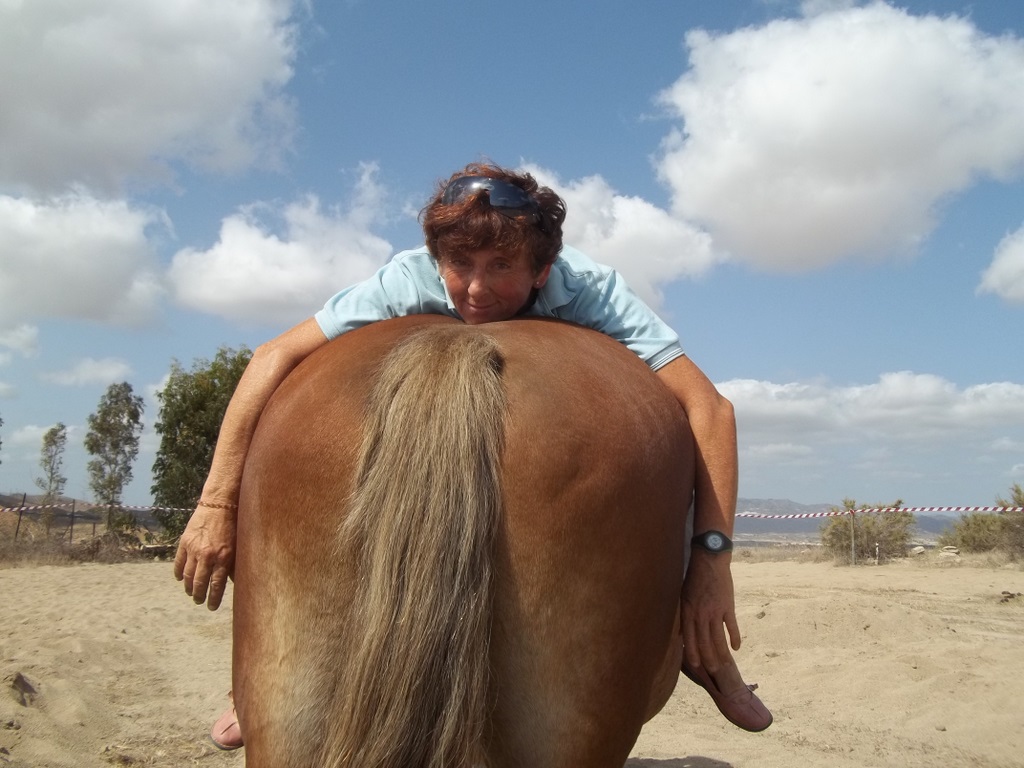
Wednesday, April 27, 2011
The Story of Angel
Angel was a young boy with cerebral palsy who came from a very small inland village in southern Spain. How Angel’s family ever found ANIMO, I have no idea. They showed up one day and said that they wanted us to help their son. The parents were farmers and were illiterate. They had no idea what was wrong with their son and assumed that he was retarded because he couldn’t speak or walk or even control his limbs. We set up an obligatory, free medical exam, by our volunteer doctor Dr. Maria Rose. She explained very carefully to the family what cerebral palsy was and that Angel was much more aware and understood much more than they had imagined. He started his therapeutic riding the following week. Angel still crawled around on the floor because the family didn’t have a wheelchair or the means to obtain one. We always had wheel chairs available for our students so that they didn’t have to put one in the car; that is if they had one. Angel advanced very well and his parents enjoyed chatting with the other families and seeing that they were not alone. Our volunteers kept the children occupied with rabbits and other farm animals while they were waiting for their turn to ride. They never understood why these strange foreign people helped work with so many Spanish disabled children, seeing as most of them never even spoke the same language. We were very lucky to have over forty volunteers from all over Europe, many of whom had worked in riding for the disabled in their own countries, and all brought a wealth of knowledge and ideas to ANIMO. In those years, the late eighties, Spain seemed to be the only European country that had never heard of Animal Assisted Therapy. As Angel progressed and the family spent time with the other parents, their whole way of treating and speaking to Angel changed; making a huge difference to Angel’s life. For the first time he was part of a loving family and not just tossed to one side. Another of our young students, with muscular dystrophy, died and wanted his parents to give his fabulous electric wheel chair to some boy who would love it as much as he did. We chose Angel. Angel and his family plus our doctor and other volunteers were there when Angel sat in this great machine. Not only could he sit up by himself, but he could go places. His family were sure that he could never even learn to use the controls but within a few minutes, to the surprise of his family, he was zooming all over our terrace.
We had meant to change the controls to the other side to make it easier for him because they were set on Angel’s bad side, but even that didn’t stop Angel. We had the wheel chair moved to Angel’s house and he soon was able to go around town on his own. The town was so pleased that in 1990 they invited me to give a talk to the village and they awarded me with a plaque of gratitude.Since we never charged a fee at ANIMO, some of the parents would bring us fruit or vegetables from their gardens. The interaction between the parents was almost as valuable as the therapeutic riding that their children were receiving. We had many group and family BBQ’s and parties for every American and European holiday. They carved pumpkins for the first time, had Easter-egg hunts on horse back, Guy Faulkes night with fireworks and every year we had a dinner where we gave out awards and prizes to the students and volunteers.
Friday, April 22, 2011
The Price of a Puppy
IF YOU ARE THINKING ABOUT GETTING A PUPPY, THEN THERE ARE SEVERAL THINGS THAT YOU HAVE TO TAKE INTO ACCOUNT. The first is time; do you have enough time? When they are young they have to go out several times during the night. They need to be played with and taught what is theirs and what isn’t. Do you work during the day? Do you plan on taking trips? Who will care for your puppy while you are away? Do you have a garden where they can run free or do you have to take them out for exercise? What size dog do you choose? As far as the cost of keeping a puppy, you can figure on about 60 euros every time you go to the vet. They need a series of puppy shots, worming, plus prevention against ticks, fleas and mosquitoes. This prevention comes in the form of drops on the neck, but needs to be applied every month; the amount depends on the weight of the dog and can become very expensive. Next you have the puppy food. Dog food is expensive. It is important to keep them on a regular diet or they will tend to get the runs. A good supplement to give your puppy is plain yogurt with a few tablespoons of olive oil and brewer’s yeast; this helps keep their skin and coat in good condition and the yogurt provides extra calcium and keeps the stomach healthy. An alternative to ready-made kibble is to make rice or lentils. This takes time and you need to add some sort of meat and vegetable to keep their diet healthy.
Another big consideration is what are you willing to lose? Puppies love to eat furniture, shoes, and clothes plus garbage. It takes a while, while they are teething, for them to learn what is theirs and what isn’t. You must have toys for them to substitute when you remove something they aren’t supposed to have. You don’t have to buy expensive toys; a rag with a knot in it, a plastic water bottle will suffice, but they do tend to love those soft squeaky toys. Every time they chew on something that they shouldn’t you must tell them no and give them something that they can chew on. Depending on the size of the dog, you have to be careful of the size of their toys. It is easy for them to swallow a tennis ball or little rubber duck.
During the first six months, they should be learning vocabulary and basic behaviour. At six months they are ready to start obedience training, which should be relatively easy if they learned the basics during play-time. Socialization is very important; the more things and situations that you can expose them to the better. Is you puppy going to be a guard dog or a companion? A lot of this depends on the breed and temperament but also on the way it is raised.
Getting a puppy is a big decision, you must be sure that you are ready for the investment of both time and money, but the rewards you receive have no price tag; they are unending and without prejudice.
Tuesday, April 05, 2011
Animals Forecast Weather
Governments spend billions of dollars every year on meteorology, yet the weather-person never even gets tomorrow’s weather right. We started by talking to farmers, in a small town in southern Spain. They had no television and were illiterate. All they knew was what had been passed down to them for generations. We were sitting talking to our neighbor when she saw three flying ants and told us that it would rain the next day. She was spot on and the weatherman missed it. My grandmother, Winifred, told my dad when he was a child, that if there was a circle around the moon, to count the stars inside the circle and in that many days it would rain. She was always right. Anyone in tornado country can tell you that before a tornado, the behaviour of the animals and the flight patterns of the birds change, way before the satellite image picks anything up. On my farm, my animals were all free to go in and out as they pleased. Always, before a storm, they would all go to the middle of the paddock, away from trees and fencing, I couldn’t even coax them in with food. There they stayed until the storm was over. In southern Spain we know when spring is coming, not by the ground hog, but because the swallows all return from Africa and start rebuilding their nests.
One night our dog tried to get us out of the house, hours before the roof caved in, almost killing our son. We had no warning; no cracks or leaks. We thought the dog just wanted to go out and find a bitch in heat and didn’t listen to him. He kept looking at the ceiling and crying and trying to go out. He couldn’t have made it any clearer.
Before earthquakes, tornados, volcanoes and other natural or even unnatural disasters, some animal or some insect knows and tries to get out of the way of the impending disaster. We just have to learn how to read these signs and we might be able to save thousands of lives.
To continue the project and before it can become an official study, we need information. So we want information from farmers, fishermen, tribesmen, Native Indians, Bushman, hikers, anyone who has travelled and come in contact with people that live by nature and their livelihood depends on knowing what is going to happen; people without the aid of modern technology and whose information comes from nature itself.
The study would include cultural anthropology, psychology, ecology, meteorology, folklore, storytellers, travellers, historians and many other fields. It would make great field work for university students.
Any information would be useful so please send your stories to me at brbrnapier (at) yahoo (dot) com with the title ANIMALS AND WEATHER. Thank you all.
Saturday, March 05, 2011
Manual Básica de la Hípica Terapéutica
To succeed in any type of animal-assisted therapy, it is essential to have a good knowledge of your students and their problems. But even more important is to have a good knowledge of the animals with whom you work and of their psychology. The only way to get to know your animals is by spending time with them. Some things cannot be learned in a book...
All animals have a way to communicate their feelings and needs; it's your job to learn to understand them. For example: the eyes, ears, and muscles of a horse can all indicate if they are afraid or uncomfortable. The job of an animal assisted therapist is to get the most benefit for their students while keeping in mind the needs of the animal.
Always watch your surroundings. Hygiene and treatment of animals is most important, no matter if you're carrying small animals to a children's center, or using an assistance dog or engaged in therapeutic riding. Working with animals is never ending. When working with animals, those assistants to the therapist, you must continue their training and their care between sessions.
Working with animals requires seven days a week and three hundred and sixty five days a year. There is no rest when you work with animals, since they depend on you for their health, food, shelter and companionship. It is all worthwhile when you see the smiles on your students or clients and see the improvement in them. Also, you will know that the animals themselves receive pleasure in being helpers.
Para sacar beneficio en cualquier tipo de terapia asistida por animales, es esencial tener un buen conocimiento de tus alumnos y sus problemas. Más importante aun es de tener un buen conocimiento de los animales con quien trabajas y su psicología. La única manera de conseguirlo con tus animales, es pasar mucho tiempo con ellos. Hay cosas que no se aprenda en un libro.
Todos los animales tienen una manera de comunicar sus sentamientos y sus deseos, es tu trabajo aprender a entenderlos. Por ejemplo: los ojos, las orejas, y la musculatura de un caballo puede decirte si ellos tienen miedo o están incómodos. El trabajo de un terapeuta con animales es de sacar el máximo beneficio por su alumno mientras que mantiene en cuenta las necesidades del animal. Siempre hay que vigilar tu entorno. La higiene y tratamiento de los animales es de lo más importante; no importa si estas llevando animales pequeños a un centro de niños, utilizando un perro de asistencia o, haciendo la hípica terapéutica. El trabajo con los animales nunca termina.
Dentro del trabajo con animales, como ayudante al terapeuta, hay que seguir tanto a su adiestramiento como a su cuidado entre sesiones.
El trabajo con animales exige siete días de la semana y tres cientos sesenta y cinco días del año. No hay descanso cuando trabajas con animales, ya que ellos dependen de ti por su higiene, comida, cobijo y compañía. Vale la pena cuando ves las sonrisas de tus alumnos o clientes y ves el mejoramiento en ellos. También, la alegría de los animales siendo ayudantes.
Friday, March 04, 2011
The ANIMO-ALBERO therapeutic riding program update:
1. Feeling of well-being and mind clarity.
2. Increased energy.
3. Improved circulation.
4. Removal of fluid from the lungs.
5. Reduction in the effects of vasculitis.
6. The ability to absorb iron for people with anaemia.
7. Cures insomnia.
8. Improves muscle tone and atrophied muscles.
9. Improves arrhythmia.
10. Helps dysfunctional kidneys lower levels of potassium, creatina, urea and triglycerides.
11. Removes toxins and thereby the side effects from toxic medication such as steroids.
12. Greatly improves symptoms of depression, stress and the menopause.
13. Helps heal wounds and skin grafts.
14. Perfect pre- and post-op preparation.
15. Small fibre neuropathy shows great promise.
16. Improves functioning of the digestive tract.
Every day we find new benefits to the ANIMO-ALBERO therapeutic riding program. After a series of trials and error, we have found that this program is much more efficient than a trail-ride or a lesson in the ring for treating the symptoms of terminal disease or illness. No stress is put on the heart, so even people with heart disorders that tire quickly, are able to complete an entire exercise program of half and hour to an hour.
The horse does the work and you get the benefit. Before participating in the ANIMO-ALBERO program you should get a doctor’s permission to make sure you don’t have any contraindications. No prior riding experience is necessary. Everything is done bare-back or with a sheepskin, with the aid of a sursingle and on the lunge line. You start at the walk and as you feel more comfortable you progress to the trot and the canter. A perfect and complete therapy program would be around forty-five minutes, doing each exercise at the walk, trot and canter in both directions. Three times a week is the optimal number of therapy sessions, however even once a week has proved to provide great benefits. The program must be tailored to each patient’s needs, so the exercises and the pace vary. This program does not eradicate the disease but it greatly reduces pain, side effects and improves your quality of life.
El ANIMO-ALBERO programa de equitación terapéutica fue diseñado para mejorar la calidad de vida de las personas que sufren de una enfermedad en comparación con la terapia al caballo tradicional para ayudar los con discapacidades mentales o físicas. Durante el año y medio que hemos estado investigando este programa nuevo y revolucionario, hemos descubierto algunas cosas nuevas e interesantes. Anteriormente, hemos pensado que los beneficios fueron a corto plazo, pero ahora nos encontramos con que muchos de los beneficios pueden ser a largo plazo después de unos meses de practicar esta terapia. También hemos encontrado que los beneficios aumentan rápidamente y duran más tiempo a medida que avanza al trote y el galope. A continuación se muestra una lista de los beneficios que han confirmado y algunos que muestran gran promesa:
1. Sensación de bienestar y claridad mental.
2. Aumento de la energía.
3. Mejora de la circulación.
4. Extracción de líquido de los pulmones.
5. Reducción de los efectos de la vasculitis.
6. La capacidad de absorber el hierro para las personas con anemia.
7. Cura el insomnio.
8. Mejora el tono muscular y los músculos atrofiados.
9. Mejora la arritmia.
10. Ayuda a los riñones disfuncionales en bajar los niveles de potasio, creatina, urea y triglicéridos.
11. Elimina toxinas y por lo tanto los efectos secundarios de los medicamentos tóxicos como los esteroides.
12. Mejora en gran medida los síntomas de la depresión, el estrés y la menopausia.
13. Ayuda a sanar heridas y los injertos de piel.
14. Perfecta preparación ante- y post-operatorias.
15. La neuropatía de fibras pequeñas muestra una gran promesa.
16. Mejora el funcionamiento del tracto digestivo.
Todos los días nos encontramos con nuevos beneficios del programa de equitación terapéutica ANIMO-ALBERO. Después de una serie de ensayos y errores, hemos encontrado que este programa es mucho más eficiente que un paseo o una lección en el picadero para tratar los síntomas de la enfermedad o enfermedad terminal. No se pone estrés al corazón, por lo que incluso las personas con trastornos del corazón que se cansan rápidamente, son capaces de completar un programa de ejercicio completo de entre media hora y una hora.
El caballo hace el trabajo y el jinete obtiene el beneficio. Antes de participar en el programa ANIMO-ALBERO debes obtener el permiso de un médico para asegurarte de que no tienes ninguna contraindicación. No importa no tener experiencia previa en montar a caballo. Todo se hace a pelo o con una piel de oveja, con la ayuda de un sursingle y bajo el control de tu profesor con su cuerda. Tu comienzas a caminar y como te sientas el progreso más cómodo para el trote y el galope. Un programa de terapia perfecta y completa sería de alrededor de cuarenta y cinco minutos, haciendo cada ejercicio con el paso, trote y galope en ambas direcciones. Tres veces a la semana es la cantidad óptima de sesiones de terapia, sin embargo, una sola vez a la semana ha demostrado tener grandes beneficios. El programa debe adaptarse a las necesidades de cada paciente, por lo que los ejercicios y el ritmo varían. Este programa no erradica la enfermedad, pero se reduce en gran medida el dolor, los efectos secundarios y mejora tu calidad de vida.
Thursday, February 24, 2011
Horse and Wine Fair
Friday, February 04, 2011
Courage
As I look at Ken’s close up video-clip of ‘Barbara’, which is posted below, I find it a bit hard to accept that I have been so physically deformed, then I felt proud of myself for coming out of hiding and getting on with my life under these circumstances. I realize that none of this would have been possible if it hadn’t been for the tremendous support, encouragement and loving friendship being constantly sent my way by friends and family. I would like to take this chance to thank all of you for remembering whom I am inside and keeping me so positive and active. I think I have been able to achieve more in the last few years than I have in a long time. It is a wonderful feeling to know that I have so many people who love and care for me, so I will keep fighting this dreadful virus so that I may continue to be a wife, mother, grandmother, and friend to all of you who mean so much to me.
Thank you all, Barbara
Thursday, February 03, 2011
Tuesday, February 01, 2011
The Walk, Eat and Drink Trio
I am off to
Saturday, January 22, 2011
Continuing Investigation Animo-Albero
Tuesday, January 18, 2011
Odds and Ends
On the continuing investigation in the ANIMO-Albero therapy program, we have discovered that many of the benefits that at first we thought were short-term have become long-term, the longer I continue the program, such as heart rhythm and the disappearance of red blotches on the skin, from vasculitis.
After we just started to get grants for these types of alternative therapies, the EU will ban all types of alternative medicine, both practice and herbal, from April of this year. Anything where there is no profit to the pharmacies, FDA or the medical community. This is something I don’t understand and will have to investigate further to keep you informed.
Our manual on the Basics of Therapeutic Riding is just about ready to go to press; it is in Spanish, since there is such a demand for this information in Spanish speaking countries. The manual covers everything you should know before starting up a therapeutic riding center, including all of the forms necessary, games, exercises, how to choose the right horse, first aid and much more.
Yesterday I was too weak and felt a bit dizzy so my class didn’t go very well but I still got some benefits and I feel much better today. Never push your student if they feel tired or weak it can just do damage and even undo some of the good work already done. I am sure my next class will be better.
For any of you that have seen the YouTube videos and don’t understand them, it is just one of my sessions that I thought you might enjoy but I realized that they are very boring if you don’t understand what I am doing and why. The benefits being, better blood circulation, more lung capacity, more energy, healing of scars and removing blotches from vasculitis, more stable heart beat, lowering of levels like potassium and creatina and triglycerides, massage to the organs, improved digestion, increased appetite, lower stress levels and depression. My heart has been weakened by this virus and I can’t do anything like walking or house cleaning for more than about ten minutes without stopping for a rest but I can easily do an hour’s session on the horse and I feel more energetic. The reason for this is that the horse does all of the work and you get the benefits. This program also helps to get rid of the side effects of toxic drug treatment and so many more things. For over a year I had to go to the hospital every three weeks to drain my tear ducts and one day after riding they drained themselves and I have never had to go back to have them drained. That was a benefit I had never even considered. If you haven’t seen the videos on YouTube you can find them in the article below this one.
Sunday, January 16, 2011
The Dog Gets the Final Word
Sunday, January 09, 2011
Hospital Christmas

Having spent the last three weeks taking care of my mother in the hospital, I haven’t had a chance to go riding or to see my puppy. Before my mother took ill I had been riding twice a week and with no medication I got my blood levels down to within normal range except creatina, which was close to normal. In all, a complete surprise to the medics. Now that I haven’t been riding I can feel all of my levels rising. This week I will start riding twice a week and see if I can live a happy, pain-free life for a while. It was very sweet that my riding instructor (and friend) Loli and her son came to visit in the hospital and brought me a Christmas basket full of my favorite foods, which was great, as I couldn’t leave my mother alone; even to go for a coffee. I am back at home now and will continue with my investigation. I hope to be writing some fun and interesting stories in the near future so don’t think that I have given up, it is quite the opposite. I want to thank my husband for sending in my hospital bear and a cute, “come home soon, I miss you”, card. I have been waiting to hear since the beginning of September when I can go and have my operation on my eyes as they are being destroyed again be the virus. I have also asked for a nutritional supplement as it is getting harder to eat; and after several inspections and blood analyses I still haven’t heard whether I am eligible to receive them. Not very speedy service from the regional health authority! What I am able to eat is getting limited.
In the meantime I will ride and stay as healthy and positive as possible. Happy New Year to all my readers. Don’t forget, AAT works.
Monday, November 29, 2010
ANIMO: National Association for the study and investigation in all types of Animal Assisted Therapy
Here are some people who helped get ANIMO off the ground by sharing their knowledge and talent with us and showing Spain just what is available world-wide:
PEOPLE THAT HELPED ANIMO TO SHOW THE BENEFITS OF AAT:
Miguel Ríos - Famous Rock Star gave a benefit concert with a group of children accompanying him in sign language.
Padre Angel - Mensajeros de La Paz, came to ANIMO to learn how to train dogs for the elderly.
International Conferences: Guest Speakers
Susan Duncan - The Delta Society: came to speak with her dog Joe
Sandra Stone - CHATA; animals in hospital with children
Sister Chiara - RDA; International liaison
Joan Would - Hippotherapist, UK
Caroline Theinpont - HAICHIKO assistance dogs Belgium
Pedro Pablo Martín Lopesino - Director of the ONCE guide dogs, Spain
Miguel Gallardo - Sac Xiroi; Center for AAT and delinquents
Dr.René Garrigue - Handi-Cheval France
Francisco Limonche - Telefonica
The list goes on and I would like to thank every one of them for helping to make ANIMO a success.
Saturday, November 27, 2010
I Believe in Animal Assisted Therapy
Raven is only six weeks old, but already he shows a lot of promise and seems to be very bright. It is too early to start any type of formal training but they can learn so much if you talk to them and use the same words over. They learn through play at this stage because their attention span is short but it all goes into the making of a great dog later in life. It takes a lot of patience and time. You have to be able to dedicate your time to repeat and go over things they know while at the same time keep introducing new words and activities to their lives. By the time he is six months and ready for obedience training it should be relatively easy because he will already know and have practiced the basics. I will just have to wait and see where his strong points are as he grows up, it is no good trying to force them to learn something that they just aren’t good at or like. An assistance dog must be happy at his work and do it out of pleasure and love. Assistance dogs are very well adjusted and used to a change in environment while enjoying the constant companionship,
These posters were made by Viv Snailham, a volunteer, supporter and great friend. Sadly, she has passed on and is, no doubt, leading programs for dogs and horses Elsewhere.